Two words on a menu carry more weight than most of the dishes they sit beside. Print “gluten free” next to a pizza in Australia and the kitchen has made a specific, testable promise: no detectable gluten in what reaches the table. Not low gluten, and not “made without wheat” either.
That standard sits in the Australia New Zealand Food Standards Code, and it’s one of the strictest anywhere. The European Union and the United States both allow up to 20 parts per million and still let a product carry the label. Australia sets no allowance at all, which goes a long way to explaining why coeliac diners here trust the words as much as they do.
What the Food Standards Code actually asks for
No detectable gluten is only part of it. The food also can’t contain oats or oat products, or any gluten-containing cereal that’s been malted, and that holds even if a test comes back clean. Those two rules are where kitchens tend to slip, usually through something added right at the end. A malt-based glaze, say, or a crumble on a dessert pizza.
The base is normally the easy part. Bringing in a gluten free pizza base made for the purpose removes the biggest single source of risk before service even starts. What it can’t do is protect the pizza once it’s out of the box and on your bench.
Where the promise usually breaks
Almost always after the base comes out of the freezer.
A 2018 study published in the Medical Journal of Australia tested meals sold as gluten free across 127 Melbourne food outlets and found detectable gluten in close to one in ten of them.
Most of those venues weren’t cutting corners on purpose. Pizza kitchens have more shared touchpoints than most, and the usual culprits are small.
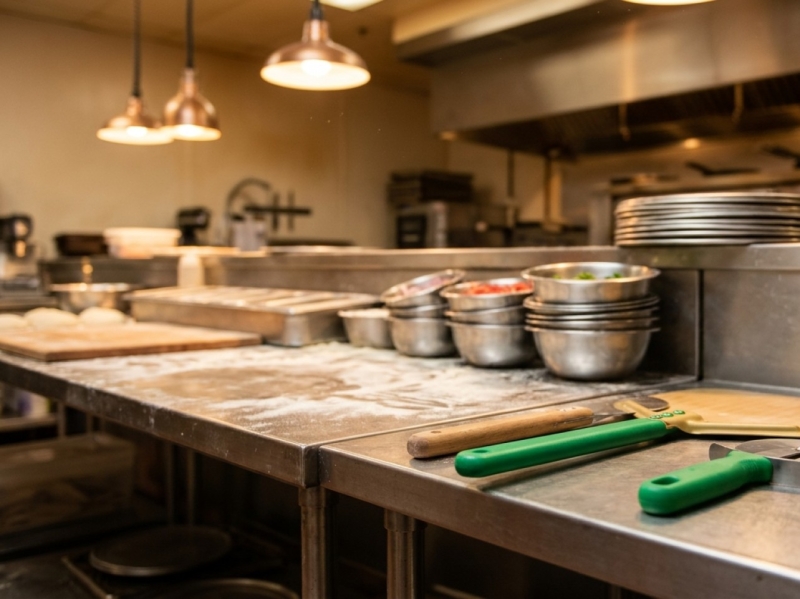
- Dusting flour on the bench, which hangs in the air well after the bag is closed
- One peel doing double duty between standard and gluten free orders
- The cutter
- A deck oven floor that’s carried a few hundred wheat bases since Monday
- Toppings pulled from the same tubs, with the same scoop, that just went over a regular pizza
None of these feel like a big deal in the moment. A staff member on their third Friday shift won’t think twice about grabbing the nearest peel, and nobody’s going to stop them mid-rush to ask.
“Gluten friendly” is a weaker promise, not a loophole
Plenty of venues use “gluten friendly” or “made with gluten free ingredients” because they can’t guarantee separation on a busy line. Where that’s true, it’s the honest call. The Code defines “gluten free” but has no definition for “gluten friendly”, so the softer wording doesn’t set a legal standard for the kitchen to meet.
What it does change is who orders. A coeliac diner reads “gluten friendly” as a warning and quietly goes for something else, or somewhere else. And the softer wording doesn’t get staff out of anything. Whatever the menu says, a customer who asks about allergens is still owed an accurate answer.
Making the claim something your kitchen can stand behind
Gluten free needs its own workflow. Swapping the base isn’t enough. Give it a dedicated peel and cutter, ideally with a different coloured handle so nobody grabs the wrong one mid-rush, and a prep spot well away from the flour. Toppings come out of fresh containers. The base goes on a clean tray or screen and never touches the deck floor.
The docket system can carry some of the load. An order that prints in a different colour, or routes straight to one nominated person, takes the guesswork out when the line is three deep and the oven’s full. Walk new starters through the routine on their first shift, not after the first complaint, because the habits that stick are the ones learned before anyone’s under pressure.
Very little of this costs much. It’s mostly setup and repetition, and it’s far cheaper to get right before the first gluten free docket comes through than to fix after a diner gets sick. If you’re adding gluten free to the menu or tightening how you run it, talk to RDM’s foodservice team and ask about the free consulting support that comes with taking on the RDM range.